People often wonder how King Herod suspected the birth of the Messiah when he ordered that all children under two be killed. According to the Sanhedrin, the “two thousand years of Torah” had passed, so the time for Jesus’ arrival was near. “The world will exist six thousand years. Two thousand years of desolation [meaning …
When and By Whom Were the Gospels Written?
Skeptics often call into question the dating of the Gospels, making the claim that they were written by “anonymous” authors “decades” or even “centuries” after Jesus was crucified. Yet we have much evidence to discount such assertions. Anonymous authors The names of the Gospels to whom the Gospels are attributed include two apostles (Matthew and …
Continue reading "When and By Whom Were the Gospels Written?"
Bart Ehrman’s Blunders in His Debate with Mike Licona
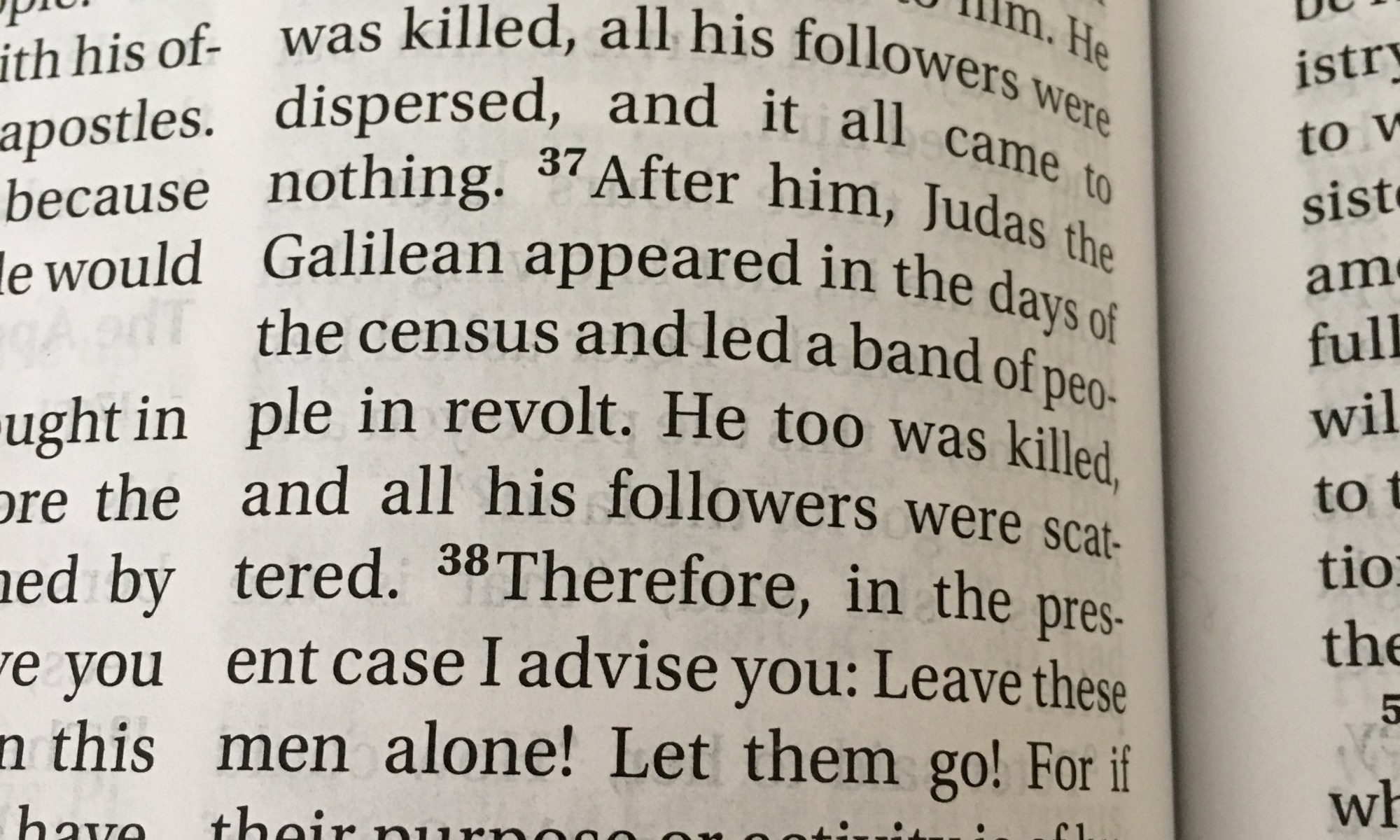
I listened to a debate between Bart Ehrman and Mike Licona where Ehrman cited what he considered to be Bible contradictions and in several cases, Licona seemed to agree with him. Both questioned the dating of Quirinius' census, which is reported in Luke's gospel. Licona did say that scholars have offered some solutions, yet he …
Continue reading "Bart Ehrman’s Blunders in His Debate with Mike Licona"
Bart Ehrman’s Biblical Blunders on “Unbelievable” with Justin Brierley
On October 25, 2019, I listened to Peter Williams and Bart Ehrman on a podcast on the “Unbelievable” YouTube channel of Jason Brierley entitled “The Story of Jesus: Are the Gospels Historically Reliable?” I found the podcast interesting, yet noted numerous contradictions within Ehrman’s own assertions. You can access the podcast here: https://youtu.be/ZuZPPGvF_2I Access my …
Continue reading "Bart Ehrman’s Biblical Blunders on “Unbelievable” with Justin Brierley"
When and WHY Did the Sanhedrin DEMOTE Daniel the Prophet?
In the Christian Bible, Daniel is listed with the Prophets, yet in the Jewish Tanakh, Daniel is listed in the Writings (Kesuvim), not in the eight books of the Prophets (Neviim). The Jewish Tanakh is divided into three categories: the five books of Moses (Torah): Genesis, Exodus, Leviticus, Numbers, Deuteronomy; the eight books of the …
Continue reading "When and WHY Did the Sanhedrin DEMOTE Daniel the Prophet?"
Did the Author of Mark NOT Believe in Jesus’ Divinity?
The original version of the Gospel of Mark may have ended at Mark 16:8. This point is not disputed by Christians as multiple versions in English of Mark’s Gospel explicitly state that the earliest manuscripts and some other ancient witnesses do not have verses 9-20. Atheists use this point to claim the author of Mark …
Continue reading "Did the Author of Mark NOT Believe in Jesus’ Divinity?"
When Did Herod the Great Reign?
Skeptics have often cited the following two passages in the Gospels to suggest that they refer to two different (and conflicting) dates: 4 B.C. for Herod's death and 6 A.D. for Quirinius' census. The intention in this article is to offer support for later dating for Herod's death and the possibility that Quirinius completed his …
What Do We Know About Quirinius?
Skeptics often claim the birth narratives of Jesus are in conflict with one another, noting that Matthew dates Jesus' birth prior to the death of Herod the Great (which some have argued is in 4 B.C.) while Luke's account places Jesus' birth at the time when Quirinius governed Syria in 6 A.D. The intention of …
Several Reasons Why I Don’t Have Enough Faith to Be An Atheist
Based on the desire to share the way, the truth, and the life of Jesus Christ, I will offer refutations for (1) the claim that Jesus is a myth; (2) the claim that the New Testament has been corrupted; (3) the claim that Quirinius took his first census in 6 A.D., (4) the claim that …
Continue reading "Several Reasons Why I Don’t Have Enough Faith to Be An Atheist"
What If We Didn’t Have the Gospels?
What If We Didn’t Have the Gospels? We have a variety of means by which we can determine the truth of Christianity or any other religious or faith claim. These include whether (1) the person making the claim is sincere; (2) the person has no material incentives for fabrication; (3) the claim has been corroborated …